How to Sell Digital Products Online (The Creator’s 2026 Guide)

Digital products to sell online isn’t new for creators—they’ve been doing it for years. What has changed dramatically is how to sell digital products in 2026, with smarter marketing channels, improved distribution platforms, and more effective monetization strategies reshaping the creator economy.
Today’s creators have more reach than ever before. Instagram, YouTube, TikTok, and Shorts can push content to thousands, sometimes millions, of people overnight. A single reel can explode. A post can travel far beyond your follower count. On the surface, opportunity feels limitless.
Yet behind the scenes, many creators are still stuck. Posts perform, but income doesn’t follow. Engagement spikes, then drops. Links sit untouched. Traffic comes in waves, but conversions feel random. The issue isn’t a lack of interest. Audiences are curious, active, and willing to buy. The issue is what happens between attention and action.
This is where Agentic AI for Creators changes the game — turning passive engagement into guided, intentional outcomes that actually convert.
The real problem is flow.
In 2026, selling digital products successfully isn’t about launching bigger, posting more frequently, or chasing every new trend. It’s about building a system where engagement doesn’t end at a like or a comment but naturally moves forward. A system where interaction leads to conversation, conversation leads to trust, and trust leads to action.
Creators who are selling consistently aren’t relying on viral moments or luck. They’ve figured out how to sell digital products by guiding interested followers smoothly from content to connection to purchase without breaking momentum or forcing sales.
This guide breaks down how creators are selling digital products online today—what’s working, what’s quietly failing, and how a creator video subscriptions platform helps build a repeatable setup that turns everyday engagement into reliable income without depending on algorithms or one-off spikes.
Why Creators Are Choosing Digital Products in 2026

Brand deals are unpredictable. Algorithms change. Reach spikes and drops without warning. Digital products to sell, on the other hand, give creators something rare: control.
When you learn how to sell digital products online, you’re not renting income from a platform—you’re building a scalable asset you truly own. A single product can be sold repeatedly, distributed globally, and updated anytime without worrying about inventory, shipping, or logistics, giving you higher margins and long-term control over your revenue.
More importantly, digital products fit naturally into how creators already work. You’re already teaching, explaining, recommending, and sharing knowledge through content. Digital products simply package that value in a way your audience can access anytime.
That’s why digital products to sell online has become one of the most reliable monetization paths for creators from beginners to full-time businesses.
What Counts as a Digital Product (And What Sells in 2026)

At its core, a digital product is any resource your audience can access instantly online no shipping, no inventory, no physical delivery. But in 2026, simply having a digital product isn’t enough. What matters is why someone would buy it.
The digital products that sell consistently today are outcome-driven. They’re designed to solve a specific problem, remove friction, or give people a shortcut to a result they already want. Creators who succeed aren’t selling information for the sake of it, they’re selling clarity, structure, and time saved.
In practice, the most popular digital products creators are selling in 2026 include:
- PDF guides and playbooks that break down a process step by step
- Templates, checklists, and planners that help people execute faster
- Toolkits and swipe files that remove guesswork
- Image packs, presets, and creative assets that help audiences improve their visuals instantly
- Digital resources and bundles that package proven knowledge into ready-to-use format
What these products have in common isn't the format it’s relevance.
The best digital products to sell are almost always extensions of content you’re already publishing. If your audience regularly asks questions in comments or DMs, those questions are often your product ideas. If a certain post consistently gets saved, shared, or replied to, it’s usually pointing toward a problem worth packaging into a digital download.
Creators often think they need to build something big or complex to start selling. In reality, simpler products convert better. A focused guide that helps someone do one thing well will usually outperform a massive resource that tries to cover everything.
In 2026, successful creators don’t invent products out of thin air. They listen to their audience, notice patterns in engagement, and turn proven interest into digital products to sell that feel like the obvious next step.
Once you start paying attention to these patterns, product ideas stop feeling complicated.
Selling Digital Products for Noobs: Start Simple
If you’re new in digital products to sell online, the biggest mistake you can make is trying to build everything at once. Many beginners assume they need a huge audience, a fully produced course, or a complicated sales setup before they can start. In reality, none of that is required.
You don’t need:
- a massive following
- a highly polished course
- a complex funnel with multiple steps
What you actually need is one clear outcome.
For beginners learning how to sell digital products, the fastest and most reliable approach is to focus on a single, specific problem your audience already talks about. Look at your comments and DMs and notice the questions that come up repeatedly—those signals often reveal the easiest and most profitable place to start.
Your first product might be a short PDF guide, a starter template, a checklist, or a simple resource that helps someone take one step forward. It doesn’t have to be long or perfect. It just needs to deliver immediate, practical value.
When you’re selling digital products as a beginner, the goal isn’t to build something massive. The goal is to learn. You learn what people are willing to pay for, how they respond to your offer, and what they want next. Starting small makes it easier to launch, easier to adjust, and easier to improve over time.
Creators who succeed don’t wait until everything is “ready.” They start with something simple, listen to feedback, and build momentum one product at a time.
Starting small removes pressure, and pressure is usually what stops people from starting at all.
The Creator Sales Loop (How Digital Products Actually Sell in 2026)
Most people assume how to sell digital products is about dropping the right link at the right time. In reality, links do not sell on their own. Timing and context do.
In 2026, the way digital products sell for creators looks very different from traditional funnels. The most effective sales loop is simple, but intentional:
You post content → engagement happens → interest shows up in comments or DMs → the product is delivered inside that same conversation.
This sequence matters because engagement is not random. When someone comments on your post, replies to your story, or sends you a DM, they’re signaling intent. They’re curious. They’re paying attention. They’re open to going deeper. That moment is far more powerful than sending people to a generic link hours later.
Traditional selling often separates content from action. A post goes live, engagement happens briefly, and then a link is dropped somewhere else, hoping people remember to click. By the time that happens, the energy is gone. Attention has moved on.
The creator sales loop works because it keeps everything connected. The content sparks interest. The engagement confirms it. And the product becomes a natural extension of the conversation already happening. There’s no hard pivot, no interruption, and no pressure to “sell.”
Creators who understand how to sell digital products consistently don’t force attention away from the moment—they stay inside it. Instead of interrupting engagement with a hard pitch, they extend the interaction, guiding interested followers to the next step while intent is still fresh.
That’s why digital products sell better in 2026 when they’re introduced through conversation, not links alone.
When everything stays connected, selling feels less like a push and more like a continuation.
Create Once, Sell Repeatedly
The real power of digital products is leverage. You invest the effort once, and the product continues to sell long after it’s created. Unlike brand deals or one-off services, a digital product doesn’t depend on your time every single time someone buys it.
That leverage only works, though, when the product is clear and focused.
When building your first digital product, simplicity matters more than scale. Instead of trying to cover everything, concentrate on one specific outcome your audience cares about. Choose a format they’re already comfortable with reading, watching, or using. Then guide them from problem to solution without unnecessary extras.
A short, well-structured guide that delivers a clear result will almost always outperform a longer product that feels dense or overwhelming. In 2026, creators aren’t winning by building the biggest products. They’re winning by building products that feel usable, approachable, and easy to act on.
The goal isn’t to impress your audience with volume. It’s to help them get results and let that value sell the product again and again.
The goal isn’t volume—it’s clarity, so people know exactly what they’re getting.
Where Creators Learn How to Sell Digital Products in 2026
Creators exploring how to sell digital products use many channels—marketplaces, personal websites, and creator-focused platforms—each offering different benefits and trade-offs depending on reach, control, and scalability.
Marketplaces can offer discoverability, but they limit branding, pricing flexibility, and direct access to your audience. Standalone websites give you full control, but they also come with setup time, maintenance, and extra tools for payments, delivery, and marketing.
That’s why more creators are choosing platforms that sit closer to where engagement already happens. In 2026, the real differentiator isn’t just where your product lives it’s how easily interest turns into access.
POP.STORE is built with that in mind. Setting up a digital product is intentionally simple. You can add your product details, upload your file and visuals, choose whether it’s free or paid, and make it live without technical setup or external tools.
Once published, your digital product becomes part of your pop.store experience. You can feature it with a promo button, share it through a landing page, or guide followers to it directly from conversations and comments. There are no extra websites to manage and no disconnected checkout flows.
Your product lives alongside your content and your audience making it easier for curiosity to turn into downloads, and downloads to turn into repeat buyers.
Where your product lives matters less than how easily people can reach it.
How to Promote Digital Products Without Sounding Salesy

In 2026, promotion works best when it feels like a natural extension of your content, not an interruption. Creators who sell consistently don’t suddenly switch tones or drop links out of context. They keep the conversation going.
Instead of pushing a product, they prompt interaction.
You’ll often see creators say things like:
“Comment ‘guide’ if you want this.”
“DM me ‘plan’ and I’ll send it.”
“Reply ‘template’ and I’ll share what I use.”
This approach does two important things at once.
First, it boosts engagement on Instagram. Comments and DMs signal interest, which keeps posts active and visible. Second, it creates a clear moment of intent. When someone comments or sends a message, they’re not being convinced they’re opting in.
That moment matters. It’s the difference between hoping someone clicks a link and responding when they’ve already raised their hand.
This is where CommentChat fits naturally into the flow. When someone comments with a specific word, CommentChat automatically follows up with a direct message. The message delivers exactly what the follower expects: a link to the guide, template, or download without delay and without breaking the conversation. There’s no awkward back-and-forth. No lost interest while waiting for a reply.
Promotion stops feeling like a pitch because it isn’t one. It becomes a response. You’re not selling at your audience, you're simply giving them what they asked for.
Most creators already do this naturally—they just don’t recognize it as promotion yet.
From Engagement to Purchase: A Real Creator Example
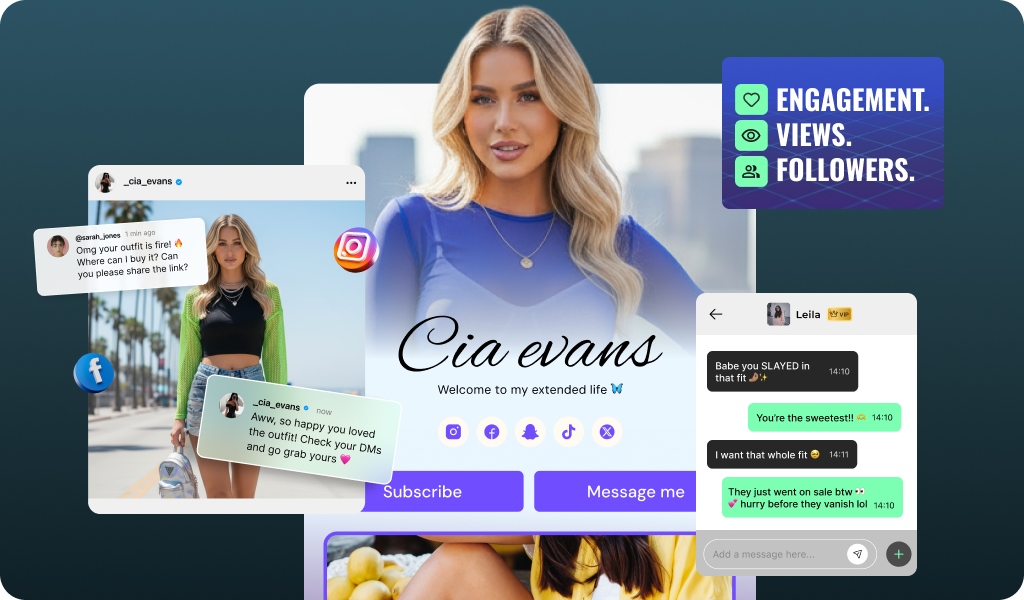
Imagine a creator who shares productivity tips for freelancers through short reels about planning better days, managing focus, and avoiding burnout. Their content performs well in terms of views, but they are still figuring out how to sell digital products effectively. Earlier, engagement was inconsistent, with a few comments here and there, occasional DMs, and conversations that often faded after the first reply.
With AI ECHO active, that pattern starts to change. As people comment on reels or reply to stories, conversations don’t stall. Replies continue. Questions get acknowledged. Comment sections stay active even after the post has been live for a while. Over multiple posts, followers begin to recognize something important: this creator actually responds.
Engagement becomes steady instead of random. New followers arrive and immediately see active discussions under posts. The account feels alive, approachable, and worth interacting with.
Once that engagement foundation is in place, the creator introduces a simple next step.
They post a reel about structuring a focused workday and add a line at the end:
“Comment ‘planner’ if you want the daily workflow I use.”
People respond not because they’re being sold to, but because they’re already part of the conversation. CommentChat automatically sends a direct message to each commenter with access to the planner on the creator’s pop.store.
The transition feels seamless. A comment turns into a message. The message leads directly to the product. There’s no waiting, no confusion, and no break in momentum. Within minutes, followers who were engaging with content become customers.
What makes this work isn’t the product alone. It’s the sequence. Engagement came first. Trust formed over time. The offer felt like a continuation, not a pitch.
That’s the difference between dropping links and building a system. When engagement is sustained and conversations flow naturally, selling doesn’t feel like selling. It feels like the next logical step in a relationship that’s already been built.
Nothing about this feels dramatic, and that’s exactly why it works.